


c-Fos
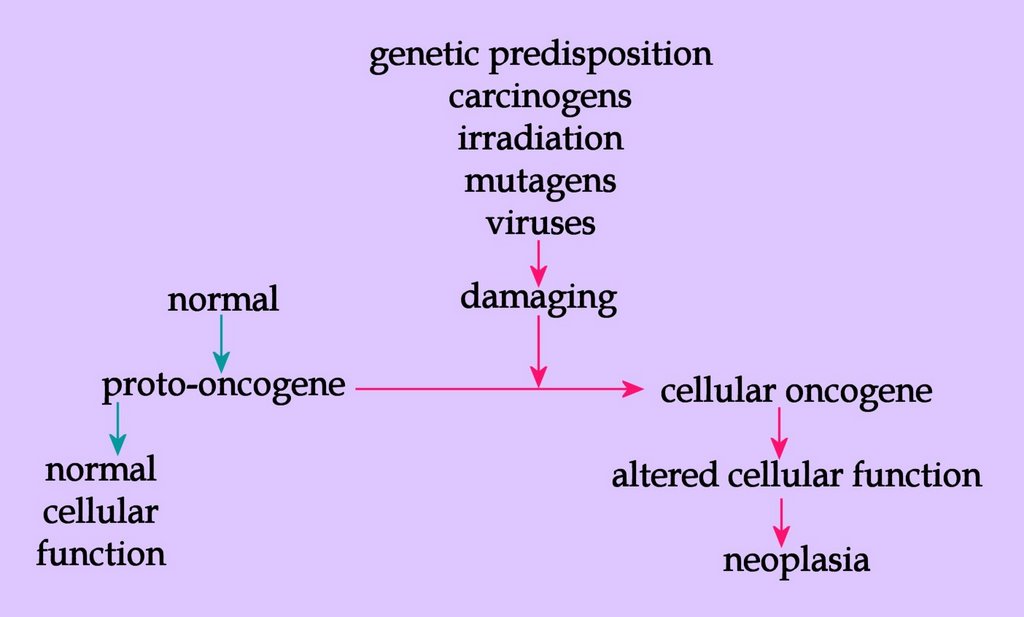
The proto-oncogene c-fos participates in cellular proliferation by encoding a transcription factor, fos that forms homodimers, or heterodimers with the proto-oncogene c-jun (as AP1). The human homolog of the fos oncogene has been mapped to chromosome region 14q21→q31, and is overexpressed in a variety of cancers. Retrovirus-associated v-fos DNA sequences were originally isolated from murine sarcoma viruses, and fos is named for feline osteosarcoma virus.
AP1 : AP1 regulation : c-fos induction : c-jun : JNK : JNKK : MEK kinase : Rac : TPA responsive element : transcription response element : TREs : v-fos :
Induction of of c-fos expression by a variety of mitogens and differentiation-stimulating agents appears to be part of a general transcriptional response to growth factors. Expression of c-fos decreases during cellular differentiation in muscle, and is inhibited by the presence of MyoD and myogenin. Expression of c-fos is stimulated before the increased transcription of c-myc, ODC, and other proto-oncogenes. [s]
Activator protein 1 (AP1) of mammalian cells is a heterodimeric transcription factor formed by c-jun and c-fos associated in a structural motif known as a leucine zipper, which is required for DNA binding. The c-jun and c-fos subunits are held together by hydrophobic interactions between leucines located every 7th amino acid in an alpha-helix region of each subunit. [] 3D model of AP1 [] diagram []
The proto-oncogene, c-jun is a cellular immediate-early gene whose expression is rapidly induced by external stimuli such as epidermal growth factor (EGF), serum, 12-O-tetradecanoyl phorbol-13-acetate (TPA), nerve growth factor, and UV. Induced transcription of c-jun is independent of new protein synthesis.
The activator protein 1 (AP1) also results from dimeric complexes between members of the atf and maf protein families. Fos and jun are the commonest constituent proteins in mammalian cells. AP-1 activity is induced by growth factors, cytokines and oncoproteins. AP1 binds to transcription response elements (TPA responsive element, TREs) in the promotor region of several genes that regulate cell proliferation, survival, differentiation and transformation. Ionic interactions between terminal clusters of arginine molecules interact with DNA. Arginine is a basic amino acid with positively charged side-groups that interact with DNA's negatively charged phosphate moieties.
Regulation of AP-1 is complex and includes factors such as the composition of the dimers, the expression level of each monomer and post-transcriptional modification of the protein. AP1 can be activated by the induction of c-jun transcription. AP-1 proteins also interact with ancillary proteins that also regulate the activity of the complex.
Phosphorylation of AP1 by Jun N-terminal kinase (JNK) occurs at the N-terminal region of the c-jun protein. JNK activation is mediated through a signaling pathway that includes the small GTPase, Rac and the protein kinases, MEK kinase (MEKK) and JNKK.
AP1 : AP1 regulation : c-fos induction : c-jun : JNK : JNKK : MEK kinase : Rac : TPA responsive element : transcription response element : TREs : v-Fos : Oncogenes: c-Fos : c-Jun : c-Myc : c-Sis : Ras : Rb : v-Fos : v-Sis : v-Myc : Tumor Suppressor Genes: TP53 :
Tables Oncogenes Proto-oncogenes Malignant Transformation Regulatory Proteins Sequences Cell signaling Cell Adhesion Apoptosis vs Necrosis Apoptosis
▲ Top ▲
Labels: AP1, c-Fos, c-Jun, mitogens, proliferation, proto-oncogenes
| 0 Guide-Glossary